
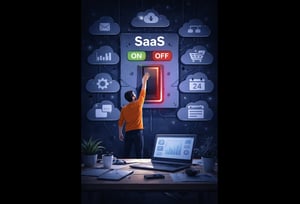
- SaaS (Software as a Service) remains the backbone of the digital workplace but is increasingly under pressure to evolve due to AI agents.
Modern AI systems such as Claude AI can take over entire workflows, partially replacing traditional SaaS interfaces. - Tools like Salesforce, Microsoft 365, or ServiceNow are not disappearing, but they will be increasingly enhanced by AI or used more in the background.
- For SMEs, this creates a major opportunity to simplify processes and work more efficiently — provided the IT strategy is clearly defined.
Managed IT Security is essential, as AI systems require deep access to sensitive corporate data. - An experienced IT partner for SMEs helps combine SaaS, AI, and security effectively, enabling organizations to actively shape the SaaSpocalypse rather than merely react to it.
What does the “SaaSpocalypse” mean for companies and the digital workplace?
This question is being raised more and more frequently in strategy meetings, boardrooms, and IT departments: Are we facing the end of traditional SaaS solutions? With the rapid development of generative AI and the recent announcements surrounding Claude AI, a term has taken hold in the tech world that is as provocative as it is unsettling… the SaaSpocalypse.
It refers to the fear that AI-powered assistants could replace entire software-as-a-service applications. Workflows that previously consisted of multiple tools, user interfaces, and licensing models can suddenly be handled by a single intelligent agent. For companies, especially SMEs in Switzerland, this is not a theoretical debate but a strategic turning point.
What is SaaS anyway?
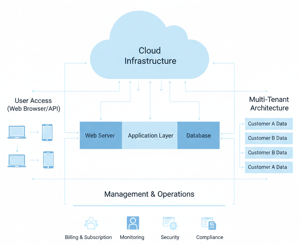
SaaS (Software as a Service) refers to software that is not installed locally but is accessed via the internet. Users connect through a browser or app, while operations, maintenance, updates, and security are managed centrally by the provider. Billing is typically handled as a monthly or annual subscription per user. This model has become widely adopted because it is flexible, scalable, and predictable, especially for SMEs. Typical SaaS tools that are now used in many companies include: Salesforce, SAP, Hubspot.
What exactly triggered the SaaSpocalypse?
The trigger was the announcement of new AI capabilities from Claude AI, developed by the US startup Anthropic. At the end of January, the company introduced so-called plugins for Claude Cowork. These extensions are not just gimmicks; they reach deep into traditional office and knowledge work:
- Automated contract and document review
- Legal analyses in seconds
- Processing and prioritization of support tickets
- Structured data analysis without a BI tool
- End-to-end automation of typical SaaS workflows
Why are traditional SaaS models coming under pressure?
Traditional SaaS solutions thrive on clearly defined functions: CRM, ERP, ticketing, document management. Each application has its own interface, data models, and licensing. AI agents, on the other hand, do not think in modules but in objectives.
A practical example:
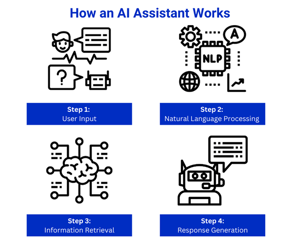
Instead of logging a ticket in the helpdesk, manually classifying it, forwarding it, and analyzing it, an AI agent reviews the request, suggests solutions, responds to the customer, and documents the case automatically. No login, no interface, no workflow designer.
For SaaS providers, this means:
- Less user interaction
- Declining license value
- Interchangeability of individual functions
At the same time, companies have an opportunity to reduce complexity, provided their IT architecture is prepared for it.
What does this mean in concrete terms for SMEs in Switzerland?
SMEs in particular find themselves in a field of tension. On the one hand, they rely on stable, proven solutions. On the other, AI-driven approaches offer enormous efficiency potential. The SaaSpocalypse is therefore less an apocalypse and more a structural transformation.
From our experience as an IT partner for SMEs, one thing is clear:
Companies that already rely on standardized, well-integrated systems benefit the most from AI. Those operating a historically grown tool landscape risk losing oversight.
This brings strategic questions into focus:
- Which processes truly create value?
- Where can automation be used effectively?
- What data are AI systems allowed to process?
Without clear governance, AI quickly becomes a risk.
Why IT security still matters
- Clear access controls and identity management
- Data classification and protection
- Monitoring and incident response
- Transparent audit trails
Will SaaS really disappear?
No. But it will evolve. SaaS will become less visible, more deeply embedded, and increasingly enhanced by AI. The interface may fade into the background, but the functionality will remain. For companies, this means that not every new AI replaces a tool — but every tool will change.
Those who act proactively today can leverage this transformation. Those who wait risk becoming dependent on uncontrolled AI services and shadow IT.
Conclusion: Apocalypse or opportunity?